-A woman came in with a skirt made of neckties. Just. Neckties, all strung together to make a skirt. She had leggings on underneath, thank god.
-Been asked for the Mona Lisa
-Been asked for the Sistine Chapel
-Been asked where the dinosaurs are
-Been asked where the animals are
-Been asked for “The Bitch With The Pitcher” (Vermeer’s “Woman with a Water Pitcher,” by the way)
-Been asked for “The Girl With The Pearl Earring”
-Been asked for the Mona Lisa
-Got bored and learned the name of every single one of the Buddhas
-Got bored and learned the name of five Chinese dynasties (long day in Asian Art)
-Chilled in the Buddha room
-Watched someone escorted out for trying to take a nude photo in the Arms and Armor section
-Been asked for the Michelangelo’s, then the Raphael’s, then the Leonardo’s, then the Donatello’s (they were naming ninja turtles)
-Heard curator in Musical Instrument section play Night On Bald Mountain on giant historical pipe organ while laughing maniacally.
-Fielded a day when a filthy counterfit version of the museum program was disseminated among visitors, guiding them to the filthiest art in the museum – such as the painting of Cupid peeing on Venus
-guarded Cupid peeing on Venus
-Been asked for the Mona Lisa
-Been asked if I had seen the First Lady of Mexico (she had gone missing)
-Been asked for that one sculpture of Kronos that is featured in Percy Jackson WHICH DOESN’T EXIST GUYS (directed children to sculptures of Poseidon with trident instead, children were very happy)
-Witnessed two Secret Service Agents get into a swordfight with pieces of packing material.
-been asked by a very polite Fransiscan monk in full brown robes if he had found ‘One of us. He has gone missing.”
-Found missing monk and returned him to the herd
-Coworker was asked for the Ark of the Convenant
-Same coworker was asked for the Baseball Hall of Fame
-stopped about 15,000 people from poking that one lion statue in the nuts
-saw a woman in a banana suit with banana shoes take a picture in front of an Egyptian temple
-Been asked for the Mona Lisas (plural)
I’ve got more but this is what I remember for now.
I would have paid money to witness the Night on Bald Mountain incident.
I’ve never really wrote a tutorial before so apologies if this is bad
1. okay first thing I do is pick three colors, a mid, dark, and light. I like to check the colors in greyscale to make sure there’s enough contrast between each one.
I then plop down a blob of whatever my middle tone color is.
2. next, I take my dark color and just sort of randomly place it around. I try to make sure there’s a good amount of both the mid and dark tones spread throughout. I personally like to keep it kinda messy. I also have pen pressure on for both brush size and opacity, so I can have some blending action going on.
3. for the next step I do the exact same thing as before, except with the light color.
4. aight this is where we start adding details. see how you just have a bunch of colors and edges where two colors meet? use the eyedropper and go to an area where two colors meet, eyedrop a color, and then use that color to draw in your grass blades. I do this at every point where colors meet. should note I personally like to use a square brush, but you can really just use anything.
5. you can technically stop at the last step if you’re going for a more simple look, but to add more details I go to the “empty” areas of solid color and just draw in random strokes using a color nearby. it’s just a way to fill up the empty space.
6. basically more of the same idea of eyedropping and drawing. for more variety so things look interesting, I like to add random plant shapes.
7. and so the grass doesn’t look too plain, I add random dots of color and pretend it’s flowers and stuff.
and there you have it, this is how I approach drawing grass.
So the other night during D&D, I had the sudden thoughts that:
1) Binary files are 1s and 0s
2) Knitting has knit stitches and purl stitches
You could represent binary data in knitting, as a pattern of knits and purls…
You can knit Doom.
However, after crunching some more numbers:
The compressed Doom installer binary is 2.93 MB. Assuming you are using sock weight yarn, with 7 stitches per inch, results in knitted doom being…
3322 square feet
Factoring it out…302 people, each knitting a relatively reasonable 11 square feet, could knit Doom.
Hi fun fact!!
The idea of a “binary code” was originally developed in the textile industry in pretty much this exact form. Remember punch cards? Probably not! They were a precursor to the floppy disc, and were used to store information in the same sort of binary code that we still use:
Here’s Mary Jackson (c.late 1950s) at a computer. If you look closely in the yellow box, you’ll see a stack of blank punch cards that she will use to store her calculations.
This is what a card might look like once punched. Note that the written numbers on the card are for human reference, and not understood by the computer.
But what does it have to do with textiles? Almost exactly what OP suggested. Now even though machine knitting is old as balls, I feel that there are few people outside of the industry or craft communities who have ever seen a knitting machine.
Here’s a flatbed knitting machine (as opposed to a round or tube machine), which honestly looks pretty damn similar to the ones that were first invented in the sixteenth century, and here’s a nice little diagram explaining how it works:
But what if you don’t just want a plain stocking stitch sweater? What if you want a multi-color design, or lace, or the like? You can quite easily add in another color and integrate it into your design, but for, say, a consistent intarsia (two-color repeating pattern), human error is too likely. Plus, it takes too long for a knitter in an industrial setting. This is where the binary comes in!
Here’s an intarsia swatch I made in my knitwear class last year. As you can see, the front of the swatch is the inverse of the back. When knitting this, I put a punch card in the reader,
and as you can see, the holes (or 0′s) told the machine not to knit the ground color (1′s) and the machine was set up in such a way that the second color would come through when the first color was told not to knit.
tl;dr the textiles industry is more important than people give it credit for, and I would suggest using a machine if you were going to try to knit almost 3 megabytes of information.
It goes beyond this. Every computer out there has memory. The kind of memory you might call RAM. The earliest kind of memory was magnetic core memory. It looked like this:
Wires going through magnets. This is how all of the important early digital computers stored information temporarily. Each magnetic core could store a single bit – a 0 or a 1. Here’s a picture of a variation of this, called rope core memory, from one NASA’s Apollo guidance computers:
You may think this looks incredibly handmade, and that’s because it is. But these are also extreme close-ups. Here’s the scale of the individual cores:
The only people who had the skills necessary to thread all of these cores precisely enough were textile and garment workers. Little old ladies would literally thread the wires by hand.
And thanks to them, we were able to land on the moon. This is also why memory in early computers was so expensive. It had to be hand-crafted, and took a lot of time.
Flake found some more cozy places to nap today. She climbed all the way up me and got into my hood by herself.
We saw one of her siblings today. Apparently it got too close to the humans for mom’s comfort, so she picked it up by the scruff and took off with it.
I’m starting to think Flake is older than I previously thought. Eye color changing from blue to adult color is something that usually happens at about 7 weeks, and it’s been almost a week since her eyes were noticeably blue. She’s just small for her age, but she’s catching up rapidly!
Hi, can you tell Flake I love her? (Also I really want an archaeology kitten now)
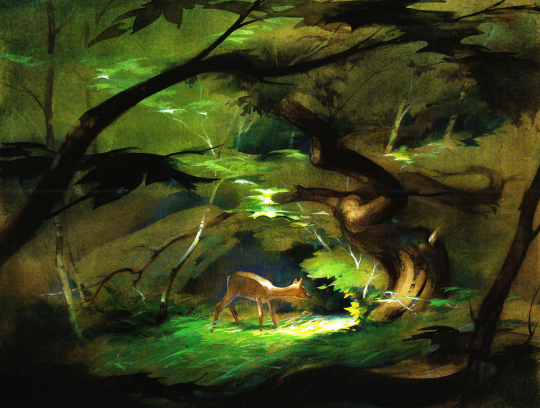
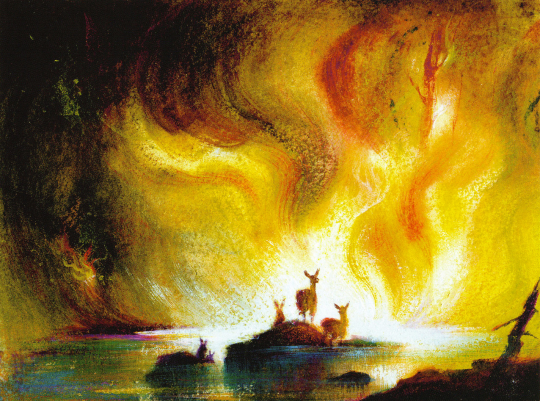
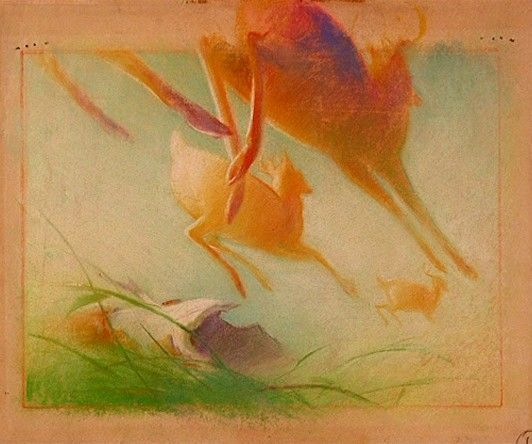
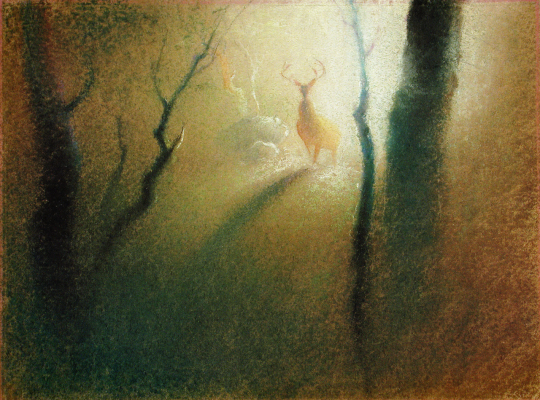
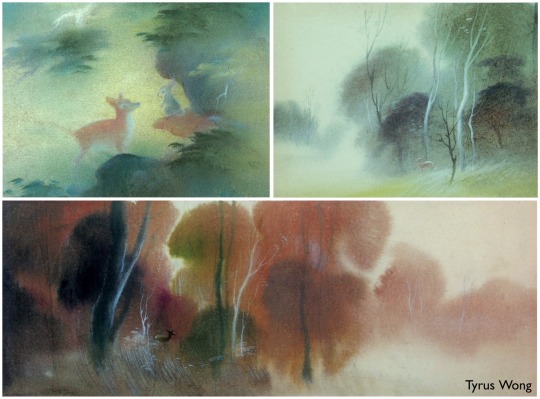
He was a young artist employed by the Disney studio, but tasked with the entry-level job of finishing off the work of the animators and crafting the “in-between” animations that completed the characters’ movements. Wong had learned that studio executives were creating a film from the new novel, Bambi, A Life in the Woods by Felix Salten. Tom says the young artist read the book and without consulting his supervisor, “took the script and painted some visual concepts to set the mood, color and the design.”
His sketches recalled the lush mountain and forest scenes of Sung dynasty landscape paintings. His initiative paid off. Walt Disney, who was looking for something new for the film, was captivated and personally directed that Wong be promoted. Today, top animators and illustrators revere Wong’s work. Children today are as enchanted by the misty, lyrical brushstrokes of Wong’s colorful nature scenes, inspired by his training at Otis College of Art and self-study of Sung Dynasty art
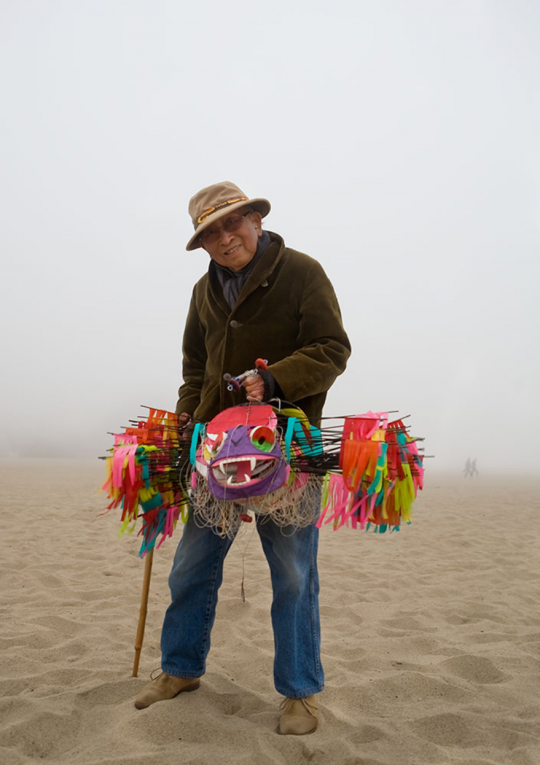
THIS GUY HELPED MAKE THE FILM THAT MADE ME WANT TO BE A FILMMAKER AND *HE IS STILL ALIVE*
AAAAAAAAAAAAAH
I met him at a gallery event a number of years ago and, UGH HE IS SO TALENTED AND SO KIND AND ENCOURAGING THERE IS A REASON WE ALL LOVE HIM. Also, my alma.
GUYS WTF IS THIS CRAZY TALENTED GUY- HE MAKES KITES TO WOW JUST WOW

















 Título del sitio